Exclusive Deal for Our Readers 15% OFF + 24H Free Trial!
Before you continue reading, grab your special offer: 15% discount
Contact us on WhatsApp now
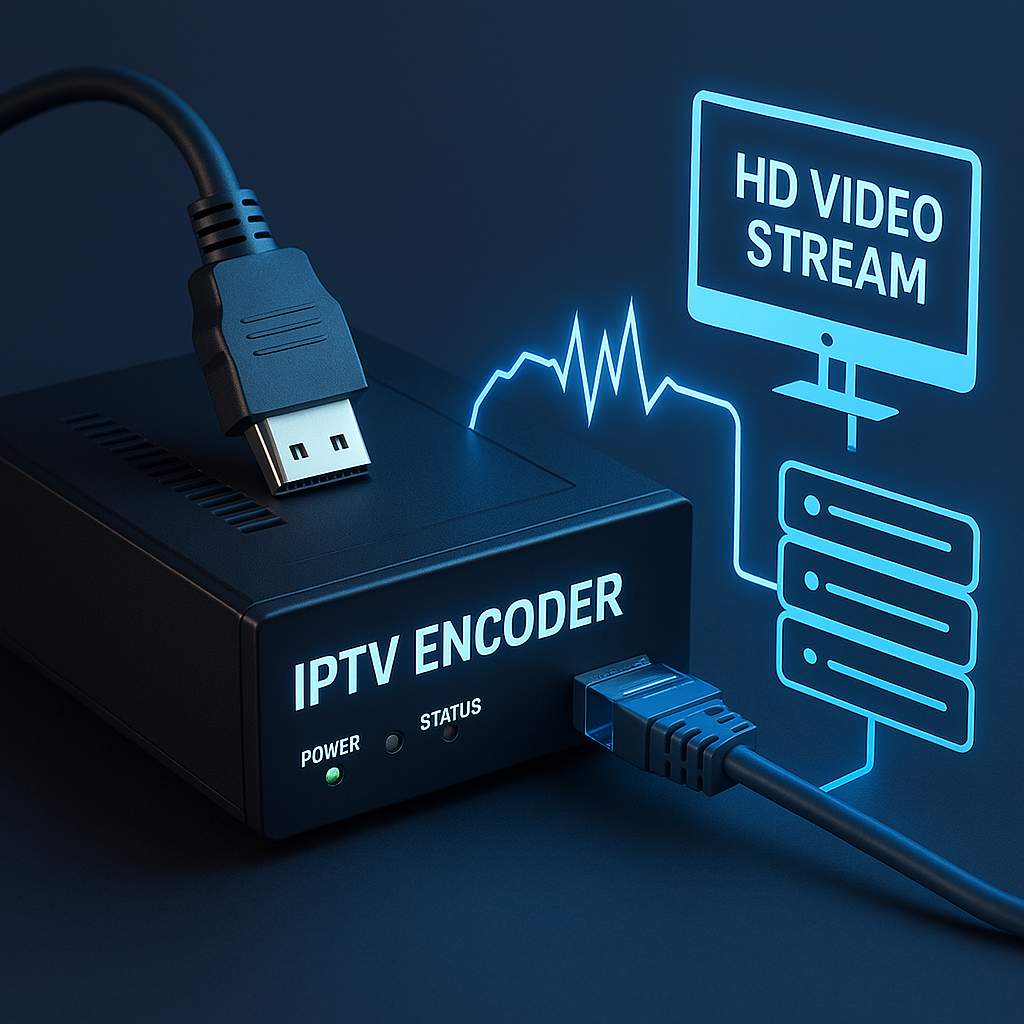
The IPTV industry has grown rapidly in recent years, driven by the increasing demand for high-quality online streaming. At the center of every stable IPTV system lies one essential piece of technology: the IPTV Encoder. It is the core device responsible for transforming raw satellite signals, HDMI sources, or video feeds into digital compressed streams suitable for online distribution.
This guide provides a deep dive into IPTV encoders, how they work, why they are crucial in 2026, the best encoder models to choose from, recommended settings, advantages, and how to select the ideal encoder for your IPTV business. Whether you operate a small IPTV service or manage a large-scale streaming network, understanding IPTV encoders is essential for quality, performance, and efficiency.
What Is an IPTV Encoder?
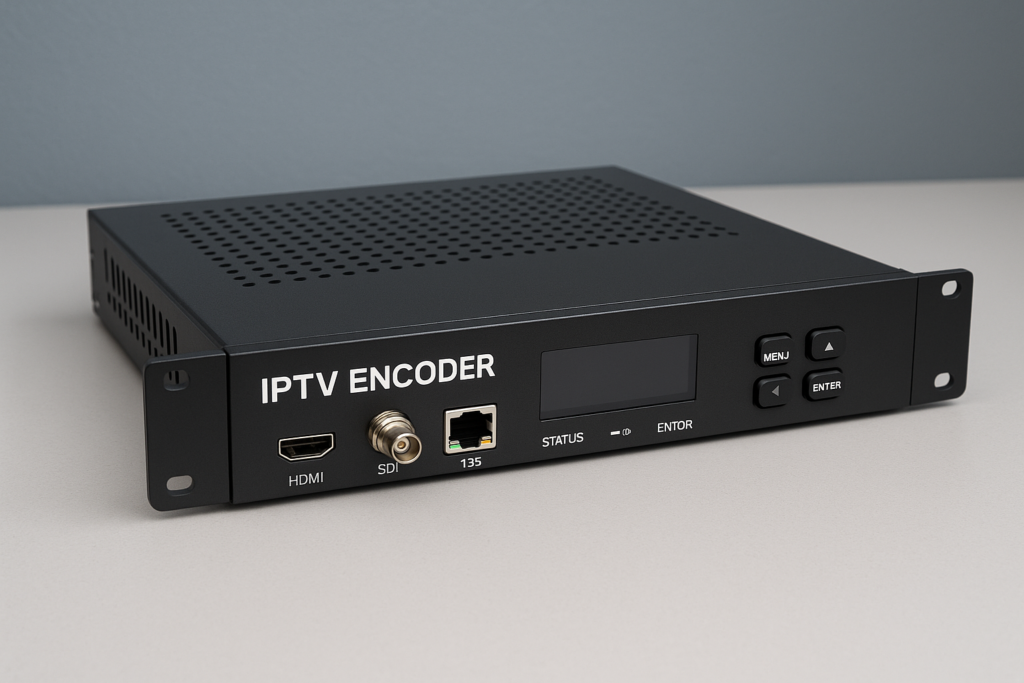
An IPTV Encoder is a hardware device or software solution that converts video input—such as HDMI, SDI, satellite receivers, or cameras—into compressed digital video streams using codecs like H.264 or H.265.
Main Functions of an IPTV Encoder
- Convert analog or digital video into streamable formats
- Compress the video to reduce file size
- Maintain high video quality with low latency
- Encode audio into AAC or other compatible codecs
- Generate streaming formats like RTMP, HLS, or TS
- Send the stream to IPTV servers or CDNs
- Operate 24/7 with stable uptime
An encoder is the first and most critical step in building a professional IPTV infrastructure.
How IPTV Encoders Work
IPTV encoders operate in four main stages:
1. Video Input Capture
Encoders accept video signals from:
- HDMI receivers
- Satellite decoders
- Cameras
- SDI sources
- File inputs (in software encoders)
2. Video Processing
The encoder analyzes the input video and prepares it for compression by adjusting:
- Resolution
- Frame rate
- Color settings
- Video noise reduction
3. Compression (Encoding Stage)
This is the core operation. Encoders use codecs such as:
- H.264 AVC – widely supported, good quality
- H.265 HEVC – 50% smaller size with same quality
H.265 is the preferred choice in 2026 because it enables smoother streaming and lower bandwidth requirements.
4. Output Streaming
The encoder delivers the processed stream to:
- IPTV servers
- Streaming platforms
- CDNs
- Live broadcast systems
Formats include:
- RTMP
- HLS
- FLV
- MPEG-TS
- DASH
This output can then be distributed to subscribers, apps, smart TVs, and players worldwide.
Why IPTV Encoders Are Essential for IPTV Services
1. High-Quality Stable Streaming
Without a high-performance encoder, users will experience:
- Buffering
- Poor image quality
- Audio sync issues
- Stream freezing
Encoders ensure professional-grade stability.
2. Reduced Bandwidth Consumption
Better compression =
✔ More channels
✔ Less server load
✔ Reduced operating costs
H.265 can reduce bandwidth by half compared to H.264.
3. Universal Device Compatibility
Encoders produce streams that work on:
- Android apps
- Smart TVs
- MAG devices
- Web players
- iOS & Windows apps
4. Multi-Platform Broadcasting
Modern encoders allow broadcasting to multiple servers simultaneously (multi-stream).
5. Security and Anti-Restreaming
Some advanced encoders offer:
- Stream encryption
- Watermarks
- Token-based URL protection
Types of IPTV Encoders (2026 Edition)
1. Hardware Encoders
These are physical dedicated devices built for continuous 24/7 encoding.
Advantages
✔ High reliability
✔ Minimal heat generation
✔ Faster and more stable
✔ Low latency
✔ Best for professional IPTV
Disadvantages
❌ More expensive
❌ Limited customization
Popular Models
- Kiloview Encoders
- URayCoder H.265
- Magewell Ultra Stream
- Hikvision Professional Encoders
2. Software Encoders
Run on computers or servers using processing power instead of dedicated hardware.
Examples
- OBS Studio
- vMix
- FFmpeg
- Wirecast
Advantages
✔ Free or low cost
✔ Flexible and customizable
✔ Good for small projects
Disadvantages
❌ Requires a powerful PC
❌ Not ideal for 24/7 non-stop streaming
❌ Less reliable under heavy load
3. Cloud Encoders
Encoding done remotely through cloud platforms.
Advantages
✔ No hardware required
✔ Easy scaling for large audiences
✔ Supports adaptive bitrate
Disadvantages
❌ Monthly subscription fees
❌ Dependent on internet stability
Key Features to Look For in an IPTV Encoder
1. H.265 HEVC Support
Essential in 2026 for reduced bandwidth and superior efficiency.
2. Multi-Protocol Output
At minimum:
- RTMP to server
- HLS to apps
- TS UDP for internal distribution
3. 24/7 Stability
Professional IPTV requires zero downtime.
4. Resolution Support
- 720p
- 1080p
- 4K
5. Multi-bitrate Encoding
Allows mobile, HD, and low-latency versions of the same stream.
6. Low Latency Mode
Important for live sports events.
Recommended Encoder Settings for IPTV
For SD Channels
- Codec: H.264
- Bitrate: 700–1000 kbps
- Audio: AAC 96 kbps
For HD Channels (720p/1080p)
- Codec: H.265
- Bitrate: 2500–3500 kbps
- Resolution: 1280×720 or 1920×1080
For 4K Streaming
- Codec: H.265 HEVC
- Bitrate: 9000–15000 kbps
These settings balance quality with bandwidth efficiency.
Best IPTV Encoders in 2026
1. URayCoder H.265 HDMI Encoder
- Affordable
- Highly stable
- Perfect for small IPTV setups
2. Kiloview E2 Encoder
- Professional-grade
- NDI support
- Multi-platform streaming
3. Magewell Ultra Stream 4K
- Simple setup
- Excellent video quality
4. Hikvision DS-69XX Series
- Enterprise-level
- Multi-channel encoding
- Designed for operators and large IPTV providers
How to Choose the Right IPTV Encoder (2026 Guide)
For Small IPTV Startups
Choose:
- URayCoder 1080P H.265
- RTMP or TS output
- Affordable and stable
For Medium IPTV Services
Choose:
- Kiloview
- Multi-input encoders
- Multi-stream output
- Low latency mode
For Large IPTV Providers
Choose:
- Hikvision or Magewell
- Support for dozens of channels
- Integrated security
- 24/7 industrial performance
Benefits of Using IPTV Encoders in Commercial IPTV Systems
✔ Better video quality
✔ Lower operating costs
✔ Stable streams for subscribers
✔ Increased number of channels
✔ Enhanced customer satisfaction
✔ Faster load times
✔ Improved server performance
A reliable encoder is the foundation of a successful IPTV business.
Future of IPTV Encoders (2026 and Beyond)
1. AI-Powered Encoding
Automatic optimization for:
- Bitrate
- Adaptive quality
- Real-time enhancement
2. Ultra Low Latency
Latency under 1 second will be the new standard.
3. Full 4K and 8K Support
Mainly for sports and premium channels.
4. Cloud-Based Mass Encoding
More providers will adopt full cloud workflows.
Conclusion
An IPTV encoder is the most essential tool in any IPTV operation. Without a reliable encoder, it is impossible to provide stable, high-quality streams to users. In 2026, choosing a hardware encoder with H.265 support is the best strategy for efficiency, speed, and scalability.
A professional encoder reduces bandwidth costs, increases channel capacity, and gives subscribers a smooth viewing experience—making it a necessary investment for anyone serious about IPTV.
iptv encoder over $2500
iptv encoder over $2500
iptv encoder over $2500